
This Page Contains 4 Weeks Data - Click Here For This Week
About this Website...


- Current Resume (PDF)
- Public Speaking
- OP ED / Articles (Cap Times)
- Consulting, Marketing and Public Policy Advocacy
- Current Legislative and Policy Positions
- Economic Development
- Wisconsin Environmental Policy
Below are links to my current publications:
NEW IN 2023






Notes for presentation for T1W...

- https://empowerwisconsin.org/
- https://www.maciverinstitute.com/
- https://www.wisconsinrightnow.com/
- https://www.thecentersquare.com/wisconsin/
- https://rightwisconsin.com/
- https://www.heritage.org/
- https://dailycaller.com/
The Mississippi River Regional Planning Commission (MRRPC)

Community Planning
MRRPC provides: comprehensive planning, hazard mitigation planning, land use planning, outdoor recreation planning, farmland preservation planning, zoning assistance, and housing studies/reports.
Economic Development
MRRPC provides: comprehensive economic development strategy (CEDS), revolving loan funds, disaster recovery, microloans, grant writing and administration, and special reports.
Transportation Planning
MRRPC provides: regional transportation planning, safe routes to school planning, corridor planning, bicycle and pedestrian facility planning, freight planning, transportation & economic development.
GIS Mapping
MRRPC provides: custom map design, interactive maps and applications, EMSI Developer assistance, and location based data services.
Benefits of our Services
- Well planned communities with a vision of how they want to grow through comprehensive plans.
- New industrial parks.
- Preparation of a regional economic development plan making communities, counties, and institutions eligible for public works and technical research grants from the U.S. Department of Commerce-Economic Development Administration.
- State technology zone tax credits for expanding business and industry.
- Preparation of county para-transit plans making counties and communities eligible for federal and state transportation grants for public and private transportation services.
- Preparation of multi-hazard mitigation plans making counties and communities eligible for FEMA and Wisconsin Emergency Management grants to fund projects that reduce losses to life and property.
- Relocation of homes and businesses from flood prone areas.
- Loans to businesses from 4 of our revolving loan funds.
- Recreational trails.
- Handicapped fishing piers, boat landings and ball fields.
JON BINGOL
Director
jon@mrrpc.com
Sarah Ofte
Administrative Assistant
sarah@mrrpc.com
Issues We MUST Work On In Wisconsin

Diversity Education and Inclusion
- In an increasingly competitive workforce environment, Wisconsin employers are seeking new strategies to attract and retain employees. Investing in workplace culture and systems that authentically promote diversity, equity, and inclusion can help employers gain a competitive edge.
- Working with communities and institutions to support a diverse, equatable, and inclusive population strengthens the ability to thrive in today`s economy and provide the resources they need to fulfill their missions.
Workforce Housing
- Article From Post Crescent
- Unaffordable: No Place to Call Home | Read the whole series
- This nonprofit has a solution to the housing crisis: Buy properties before investors get to them, then sell them to people who need them most
School to Work Transitions, Apprenticeship, and Job Training
- Every High School Graduate should have a career plan.
- We should exponentially increase Apprenticeship and Work Experience programs in Wisconsin
Ken Harwood: Speculation on Judge Doyle Square project is not helpful

Dear Editor: Regarding the article "Nothing short of bizarre: New dispute emerges between Madison and Judge Doyle developer." I would like to hear from George Austin and the developers who would have a real understanding of the issues here and I can wait until after the meeting because speculation only make things worse. I get very nervous when the lawyers step up to the mic and in this case the two representing the city do not seem to agree.
Funding may be a real issue because in development time is money and a delay regardless of cause may cause money to tighten, but that is only a guess on my part. I do not know how much of the actual process has made the news, but if letters from lawyers is the first point of discussion I have real concerns with the management of the product. My assumption is that the staff has been working on this and Beitler is concerned about the time it takes for government to do anything — again only speculation on my part but we have some pretty smart people at the table.
Also, why is Assistant City Attorney Kevin Ramakrishna so vocal and opinionated while City Attorney Mike May is more reserved and pragmatic in his comments? Of course that might just be me reading between the lines but the mayor and staff have offered no comment. Even Ald. Dave Ahrens is not addressing the specifics and he is often very vocal regarding the developer.
Clearly there is tension between the two parties, but until we have this issue before us in full the city needs to manage the press — me included.
Ken Harwood
...Full Story HereKen Harwood: State Street space becoming too pricey for retailers
Mar 3, 2016
Dear Editor: In response to Mayor Soglin asking City Council members to restrict downtown liquor licenses, this is economics 101. Space on State has become too expensive for retail to stay afloat and new food/bars will be in line to fill in the gaps as retailers fall. I agree a retail balance is needed, but Soglin is literally asking building owners to take more risk and make less money. Even the retailers who own their buildings are realizing they can make more selling the building than by staying in business.
To get retail one needs investors to acquire the properties and lower the rents for retail business or attract high-volume, high-profit retailers. There is a gap here for the investor, because he or she can invest in higher-margin business like, well restaurants and bars. Taking away or limiting these entities does not fill the gap.
Restricting liquor licenses will prevent new attractive businesses from coming downtown and will keep the older watering holes in place. They will increase profits by lowering prices and encouraging the behavior the city is trying to curtail in the first place. High-margin retailers may come as well, but it will be Vaopor shops, not art, clothing and gift stores.
To create a retail vibe and market share, the downtown retailers need to operate like a single store or mall. Co-op advertising, events, tourist and resident hours, an eclectic mix of retailers, and other intensives like a cool little transit system would be a start. The BID (Downtown Business Improvement District) works in this direction and does a good job with limited resources. The mayor may want to turn there for ideas. Once all this is in place, you can be selective with liquor licenses and develop the mix you are looking for.
Ken Harwood
Evansville/Madison
...Full Story HereKen Harwood: Focus on environmental issues other than global warming
 Apr 28, 2016
Dear Editor: Thank you for you excellent coverage of Earth Day and Earth Day events. I did notice that, once again, global warming was front and center as the key topic of discussion.
I want to remind readers that when Earth Day was created in 1970, global warming was not an issue. In fact, on the first Earth Day ecologist Kenneth Watt stated, "The world has been chilling sharply for about 20 years. If present trends continue, the world will be about four degrees colder for the global mean temperature in 1990, but 11 degrees colder in the year 2000. This is about twice what it would take to put us into an ice age."
Oops — but we focused on pollution, water quality, land conservation, recreation, and creating a better world for our grandchildren. I believe we need to return to this vision.
Why focus on global warming? What we need to do is address the issues of expelling carbon into the environment. Global warming is ONE issue, but there are hundreds more and we never talk about them anymore.
We now have leaders suggesting that the debatability of the science surrounding global warming should allow for exceptions or outright elimination of carbon regulations. This would include our own governor and legislative majority.
Global warming is not the only reason to reduce carbon emissions. The fact is that cost-effective ways to reduce emissions that create new jobs, are good for business, improve our economy, return jobs to the U.S. and Wisconsin, improve land use, improve general air and water quality, reduce our dependence on foreign energy, and are good for our grandchildren should be front and center.
I am a pro-business environmentalist who does not give a damn about global warming. Why? Because I do give a damn about getting things done.
Ken Harwood
Madison/Evansville
...Full Story Here
Ken Notes: Published in Cap Times and others...
Kimberly Clark and America’s Dairyland
 Original Article by Ken Harwood
I am writing about two stories that point out how our economic development system and government could better serve the State. Both stories made headlines this week and I feel they are connected, in fact they should be very connected by the press. They are not...
While I am not opposed to working with KC, I still strongly suggest we would do far better as a State if we simply offered tax credits to any company expanding it’s employee base in the State and property tax credits for improvements yielding taxable infrastructure. I like the figure (for discussion’s sake) of 20K over 10 years for every new hire and 10% TIF for new buildings with a signed development agreement guaranteeing property tax value in hand. This would place Wisconsin much higher on the economic development scale nationwide than it is now. Also it would eliminate the political games now played to get any tax credits. Wisconsin is ranked well bellow it’s development and growth potential, and that is after Foxconn is figured in. We need to address the needs of all growing businesses in Wisconsin. We are not...
Now lets contrast the KC 388 figure with the 638 dairy farms that closed last year in the state. Wisconsin has gone from 16,000 dairy herds in 2004 to 8,000 in 2018 or a fifty percent reduction in family farms. In that same time frame we have added slightly to the total number of cows being milked (1.2 Million +). How does this happen? Large corporate farms, milking thousands of cows, using far fewer employees per head, and waste management that spreads manure far beyond what is needed by the land for nutrition exponentially reduces costs. Small farms can not compete. Our legislature ignores this problem because we are talking about maybe 20K votes and very little contributions and most of that is coming from the corporate farms. Compare the KC 388 to the well over 1,000 farm jobs an I suggest it is fair to make the comparison.
We can step away from politics and look at problems and solutions or we can listen to the paid professional lobbyists who represent a specific company or specific interest and address their very specific requests. We should not...
...more
Ken Notes: This article Op/Ed may be reprinted or edited in any form without permission. Ken Harwood Advocate For Wisconsin, Editor WisconsinDevelopment.Com - 608.334.2174 - Albany/Madison Wisconsin
Ken Harwood: Only thing worse than WEDC is no WEDC
Nov 16, 2015
Dear Editor: Regarding your editorial "Shut down Scott Walker`s WEDC before the next jobs fiasco," I have suggested dramatic change for WEDC since before it was created. But when a company was hinting at leaving Lafayette County, WEDC was still my first call. The Lafayette company stayed and WEDC did help. I do suggest that WEDC should have been more communicative, made the process easier and more transparent, and been able to provide access to their resources without my having to know a "guy" on the inside. WEDC does need to be fixed.
That said, the only thing worse than the WEDC we have now is no WEDC at all. The ability to direct funds in a timely manner is imperative. A link to federal funds is crucial. Even the communication to the Legislature, as poor as it may be, is needed.
The bad: WEDC does not track the loans or grants they make, the communication is at best partisan, they do not work closely enough with the development professionals or elected officials at the local level, and they shoot their wounded. It is a mess but a strong leader could fix it. Should fix it. And if fixed, it would be a needed tool in a state with few tools at its disposal. The new mantra should be prioritize, justify, track, communicate.
Shutting WEDC down and returning the functions to the even more dysfunctional, more partisan, less informed state Legislature would be a mess.
Ken Harwood
Evansville and Madison
...Full Story HereA new role for the WEDC

November 14, 2012
Of late some mud has been slung at the newly formed Wisconsin
Economic Development Corporation (WEDC). Much of it deserved. The agency
discovered it had failed to track nearly $9 million in loans that are
not current, the chief financial officer resigned and Governor Walker
brought in a new interim leader while suggesting he would be discussing a
series of dramatic moves with the board. WEDC will seek new leadership
in a national search as Paul Jadin, former WEDC CEO, jumped ship to run
Thrive, the economic development partnership for the Madison area...
We Need - To build a fair and level system for distributing grants, tax breaks, loans and other ED incentives
We Need – Rules to play by.
We Need – A scoreboard.
We Need - To work more closely with ED Professionals already in the field.
We Need – To use the whole team.
We Need – Great coaches and training.We Need – The stadium.
...Full Story HereKen Notes: This article has held up well and had WEDC done any of the things I suggested we would have seen less criticism over the last 8 years. I do not think this is a partisan issue I think this is a Wisconsin Issue...
Ken Harwood: Work harder on Wisconsin`s presence in I-39 association
Sep 23, 2015
Dear Editor: Regarding the new distribution center for Dollar General in Janesville.
This is great! And we can do more. The I-39 corridor is considered a mecca for distribution and Illinois has been capitalizing on this since I was working on projects in Deforest a decade ago. There is an organization with a website and WISCONSIN should be better represented!
I have talked to the organization (The I-39 Logistics Corridor Association) and they would love to work with Wisconsin. In fact the Rock County Planning, Economic & Community Development Agency and Helgesen Development are members. Our Illinois-is-the-enemy and anti-rail approach is not helping, though. With Chicago, Minneapolis, Milwaukee, St. Louis, the Great Lakes and the Mississippi as prime targets, I-39 and Madison are right in the middle, a distribution home run of sorts.
I challenge the state and Legislature to strengthen our presence to bring even more Dollar General-like centers to the area!
Ken Harwood
Evansville
...Full Story HerePlain Talk: Why not lead the way to a clean energy future?
 DAVE ZWEIFEL | Cap Times editor emeritus | Sep 4, 2015
A recent Voice of the People letter written by Ken Harwood said what a lot of folks feel about the state`s biggest business lobby, Wisconsin Manufacturers & Commerce.
"It is too bad that (WMC) has an opportunity to take a lead role in working with both sides on an energy plan for Wisconsin and chooses to just say no," Harwood, of Evansville, wrote.
But that`s been WMC`s usual stance in recent years, staunchly opposing any proposal that it perceives as challenging the status quo, and then turning it into a partisan political issue.
WMC has been nothing short of apoplectic over the Environmental Protection Agency`s carbon reduction plans, contending that for Wisconsin to reduce emissions over the next 15 years will bankrupt everyone from business owners to homeowners.
The business consortium`s vice president for communications, Scott Manley, is dispatched to spread the alarm through alarmist guest newspaper columns and appearances on radio and television shows.
But, as Harwood asks, wouldn`t it be more productive to actually work on a solution that could not only meet what really are quite reasonable EPA guidelines with ample time to meet them, but could really be a blessing for the health of Wisconsinites and of Earth itself?
As Harwood pointed out, the WMC should mention that the cost of solar is way down and natural gas can now fill in many of the gaps that the organization claims are problems caused by onerous emission limits on coal-fired power plants. Instead, Manley`s op-eds focus on the limits of wind power.
"Why can`t Wisconsin take a lead role in energy production, environmental sanity and a nonpolitical approach to working together as a state to create new jobs, a better environment for our kids and political sanity?" he asks. "Remember when Wisconsin used to lead the way on some very difficult issues that the nation was dealing with? Why can we not do this again?"
Why not, indeed.
Dave Zweifel is editor emeritus of The Capital Times. dzweifel@madison.com and on Twitter @DaveZweifel
...Full Story Here
Ken Notes: I want to thank Dave for this article, he and I often disagree but remain friends and advocates for the state we love.
Ken Harwood: Wisconsin should lead on clean power
Aug 29, 2015
Dear Editor: It is too bad that Wisconsin Manufacturers & Commerce has an opportunity to take lead role in working with both sides on an energy plan for Wisconsin and chooses instead to just say no. Scott Manley and WMC should mention that the cost of solar is way down and natural gas can now fill in many of the gaps he cites as problems. Wind will continue to come down in price and size, and increase in efficiency, and using it as the sole example is wrong and misleading.
Many of the energy companies are willing to work toward a more green distribution network. That said, why can`t Wisconsin take a lead role in energy production, environmental sanity, and a nonpolitical approach to working together as a state to create new jobs, a better environment for our kids, and political sanity.
Remember when Wisconsin used to lead the way on some very difficult issues that the nation was dealing with? Why can we not do this again?
Ken Harwood
Evansville
...Full Story HereKen Harwood: We must balance jobs and protecting environment
Dear Editor: Rep. Melissa Sargent`s column, "Don`t let go of dream for a better Wisconsin," sounds great, but where is the balance that suggests we work with employers to sustain a future that both provides jobs and protects our environment? She wants a great education for her children but statistically they will leave the state for good jobs if they are well educated. We need a nonpartisan viewpoint that understands the delicate balance between our resources, jobs, education and our future, and unfortunately neither party is close.
Ken Harwood
Evansville
...Full Story HereKen Notes: I do try to cover both sides and believe the solutions are often found in the middle...
A look at `The Art of the Deal`
 I thought I would write a Column / Op Ed based on the Trump campaign from the perspective of the 11 Winning Negotiation Tactics From Donald Trump`s book `The Art of the Deal`. I find it interesting and a great way to look at exactly what the future may have in store for the nation. So here are Trump`s tactics followed by my observations:
1. Think big
DT "I like thinking big. I always have. To me it`s very simple: if you`re going to be thinking anyway, you might as well think big."
Clearly he thought big. It is interesting that many thought he was thinking about increasing his Q score -- NOT actually being president!
2. Protect the downside and the upside will take care of itself
DT "I always go into the deal anticipating the worst. If you plan for the worst--if you can live with the worst--the good will always take care of itself."
The downside here was a bad loss and Mr. Trump was clearly focused on maintaining his brand and credibility even if another candidate emerged victorious. He would have said that he was running to bring issues to the table, bring new blood to the republican party, and restore a new interest in the election process. He would have been able to do all of that and more - his “downside” was covered with no chance of failure.
3. Maximize the options
DT "I never get too attached to one deal or one approach...I keep a lot of balls in the air, because most deals fall out, no matter how promising they seem at first."
This may be why he won, he used every possible option he had from attacking his opponents to working the crowd. He was a media mastermind and new how to use it. He would say anything so that when he said something wrong he was just being Trump, no harm no foul.
4. Know your market
DT "I like to think that I have that instinct. That`s why I don`t hire a lot of number-crunchers, and I don`t trust fancy marketing surveys. I do my own surveys and draw my own conclusions."
His market was the media, not the voter, and he knew this. He knew that the choir was converted and they weren’t on his side so he turned his back on them and preached to the audience. He knew that if the show was big and entertaining he would always have center stage. The interesting thing is that talking to the individual in the audience was not his goal – the size of the audience was his goal.
5. Use your leverage
DT "The worst thing you can possibly do in a deal is seem desperate to make it. That makes the other guy smell blood, and then you`re dead."
Two billion dollars in free media was the estimated value of his leverage with the media, he made every candidate in the race seem desperate and then used the media leverage he had gained from to destroy them.
6. Enhance your location
DT "Perhaps the most misunderstood concept in all of real estate is that the key to success is location, location, location...First of all, you don`t necessarily need the best location. What you need is the best deal."
He was, and is, the king of making the best deal in the location he was in. When his location was the bible belt he became a better christian. In the cities it was terrorism. Where education was an issue he promised to eliminate common core. Where energy and water were issues he said let`s get rid of the Environmental Protection Agency (although he couldn`t remember the name of the agency and thought it was a department). Surrounded by elderly he talked about Saving Medicare, Medicaid and Social Security without cutting benefits. He did not have a stump speech because stumps have roots he changed his message for the location and the best deal.
7. Get the word out
DT "One thing I`ve learned about the press is that they`re always hungry for a good story, and the more sensational the better...The point is that if you are a little different, a little outrageous, or if you do things that are bold or controversial, the press is going to write about you."
Ya think! Read what he says here again, it was his objective to be outrageous from the day he announced. From the building the wall to ending political correctness he focused on issues the would make the evening news. There is a good story in the Washington Post that includes 76 of these campaign “promises”. Remember his goal was NOT to make promises, his goal was to get the word out and make the evening news. He fed the press with a shovel.
8. Fight back
DT "In most cases I`m very easy to get along with. I`m very good to people who are good to me. But when people treat me badly or unfairly or try to take advantage of me, my general attitude, all my life, has been to fight back very hard."
If the press was not loving, in fact worshiping, him he fought with a vengeance and how did the media respond, he did a one on one prime time interview with Megyn Kelly whom he had called a lightweight reporter (of course in his defense the lightweight comment was because he was explaining that he only retweeted the bimbo comment). He attacked his opposition with an onslaught of nicknames and unsubstantiated observations. But every thing out of Donald`s mouth is retractable it is the magic of fighting his way.
8. Contain the costs
DT "I believe in spending what you have to. But I also believe in not spending more than you should."
I did mention the two billion in free media and this will continue through November. He can now legitimately ask all the super pacs to unite behind him to defeat Hillary. He will masterfully suggest that they run and fund the negative attack side of the race and he will fuel the flames with comments and accusations. Trumps gun is loaded regarding his opponent –- Vince Foster affair, The Travel Employees, Stand by your man, Benghazi, Her court record as a defense attorney, Is she a lesbian, Emails, Her investments, The bank speeches, Carpetbagger, hundreds more. Each of these will place Donald on the Evening New and on every front page in the nation.
10. Deliver the goods
DT "You can`t con people, at least not for long. You can create excitement, you can do wonderful promotion and get all kinds of press, and you can throw in a little hyperbole. But if you don`t deliver the goods, people will eventually catch on."
Now it gets interesting. He clearly delivered on the primary side but moving forward it will not be so easy. Lets look at both potential scenarios:
DT "Money was never a big motivation for me, except as a way to keep score. The real excitement is playing the game."
Notes:
John Dunn: Look at all sides of the energy issue
Apr 18, 2015
Dear Editor: Wouldn’t it be great if Melissa Sargent and others wrote more about hopes and dreams?
I noticed a couple of letters from Ken Harwood recently. In one he wrote: “Where is the balance that suggests we work with employers to sustain a future that both provides jobs and protects our environment?” There was another about the Clean Power Plan.
Balance or equilibrium is an important quality. If it were possible, all of our systems could be tuned for optimal performance. There is a sort of balance where the greatest benefit can be brought to the greatest number of people for the longest period of time. Thinking seven generations ahead is fitting.
I can suggest looking into the return on investment with energy efficiency. I can suggest looking at what the development of local, scaleable, distributed renewable generation would do for us.
There can be more than two sides to an issue. I feel the Clean Power Plan — energy planning — has more than two sides to it.
To exclude energy efficiency, demand response and local renewables from our energy planning is a grave error. Unfortunately, this may be what is happening with two sides of the issue being portrayed.
John Dunn
Mauston
...Full Story HereKen Notes: And some agree...
Dane County second in nation in private sector wage increase
 MIKE IVEY | The Capital Times | mivey@madison.com | Mar 21, 2014
In what local officials call a sign of the area’s robust recovery, private sector wages in Dane County jumped 9.3 percent over the past 12 months, the second largest increase in the nation.
Only San Mateo County, southwest of San Francisco, saw average wages grow at a faster rate, according to figures from the U.S. Bureau of Labor Statistics released this week.
The Dane County wage numbers were included in the quarterly Census of Employment and Wages (CEW), the same that showed Wisconsin 35th among states in private sector job growth.
Areas like healthcare, information technology and education services were driving the pay increase, with wages in those sectors jumping by double digits. Construction wages in Dane County were also up sharply.
Paul Jadin, president of the business boosting Madison Region Economic Partnership or MadREP (formerly Thrive), says the jump in wages here is reflective of the region’s strength in higher-paying, technology-based sectors.
“What is most telling to me is how it shows Dane County doesn’t rely on manufacturing as much as the rest of the state,” he says.
Manufacturing wages in Dane County were up only 2.7 percent over the past year, with about 24,000 workers in that sector out of a population of 503,000.
Ken Harwood, who edits Wisconsin Development News, credits Epic Systems for contributing to the wage growth. The Verona-based medical records giant is the Dane County’s largest private sector employer with more than 6,000 staffers.
“Epic is bringing in all these kids and paying them $50,000 or $60,000 right out of college,” he says.
But Aaron Olver, economic development director for the city of Madison, was quick to caution that Epic Systems accounts for only 2 percent of total employment in Dane County and doesn`t account for the entire pay boost.
“While Epic certainly has an important impact, this top-line growth in wages reflects a more robust economy,” says Olver.
One potential quirk in the data is the line showing a nearly 49 percent increase in wages in the education and health services sector, with 189 new establishments formed over the past 12 months.
Jadin had no explanation for those figures and said it may take some more research to figure out what was accounting for that huge figure.
“It might be related to Obamacare but we’ll need to do more drilling down to determine what it is,” he said.
Dane County Executive Joe Parisi cheered the numbers, saying it shows the attractiveness of the region, its outdoor recreation, arts scene and diverse communities.
“Dane County leads the state in high-tech employment growth,” he says. “We have a culture of collaboration and innovation that suits this industry very well.”
The CEW is considered by most the economists the “gold standard” of data since it relies on actual job data gathered from 95 percent of U.S. employers. The data set released this week is for the 12-month period from September 2012 through September 2013.
...Full Story Here
Ken Notes: Aaron is correct, EPIC is only a small percent of the county, but they do create competition in the marketplace and all boats rise with the tide.
Will millennials ever buy houses?
MIKE IVEY | The Capital Times | mivey@madison.com | Mar 7, 2014If the people renting all those shiny new apartments in downtown Madison aren’t interested in buying real estate, what impact might that have on the broader housing market?
It’s a difficult question to quantify given that no one is keeping stats on recent arrival home buyers per se.
But anecdotally, some in the real estate business do see less interest among young people today in buying a home or condo whether because of debt, a low-paying job or location choice.
“People who are more tempted to rent downtown are really opting for that more urban lifestyle,” says Chad Sperry, owner of the Condo Shoppe, a division of Restaino & Associates. “They aren’t looking to commit long-term.”
The broader housing market has clearly rebounded since the recession, with Dane County seeing 7,397 total sales in 2013, about 7 percent below the record 7,981 sales set in 2005.
At the same time, sales of lower-priced homes which are often considered the best gauge of first-time buying activity are still lagging a bit.
Figures compiled by Troy Thiel of Keller Williams show 2,564 sales of homes in the $100,000 to $250,000 price range last year in Madison, Fitchburg and Middleton. That’s about 26 percent below the number of entry level sales for those cities in 2005.
Thiel cautions against inferring too much from the data, however, noting that a lot of sales activity in the lower prices ranges came in Verona, Sun Prairie and Cottage Grove — areas not included in his analysis above.
Still, Thiel concedes that workers in technology fields, i.e. Epic Systems, are perhaps not the best market for selling a home or condo.
“There may be some truth to the millennials being less likely to buy right now,” he says. “It also has something to do with high-tech employees moving more frequently."
Epic’s impact on the local scene — the apartment market or otherwise — has sparked a lively discussion over the past few days. Alan Talaga in Isthmus this week asked whether Madison might see a backlash against tech workers like the one that has occurred in San Francisco, a topic explored in this week`s Capital Times cover story, “Boom Town.”
For economic development officials, the question is: How do you get those new arrivals to put down roots here, investing in the community and adding to the tax base and school system?
“I actually think we will see some of these (apartments) convert to condos as that market rebounds and the inventory becomes tighter,” writes Ken Harwood, editor of Wisconsin Development News.
Harwood has long predicted that downtown living would become the hot new trend in Madison as both young professionals and empty nesters seek a more lively urban experience.
“Now the trick will be to keep the YP`s and Boomers downtown,” he says. “We will need great schools, entertainment, heath care, grocery and lest you think I forgot, transportation.”
Anecdotally, Realtor Liz Lauer says her firm sold 15 homes to Epic employees last year and advises against painting with too broad a brush when considering the impact of Madison`s emerging technology sector.
“What I’ve found different today is that people moving here don’t just grab a Realtor and buy something,” she says. “They want to feel like they have some liquidity and don’t know if they will be in the city that long.”
At the same time, Lauer says as younger people decide to stay here, get married or start having children, they will consider making a longer term housing investment.
“I feel like millennials will still be buying homes, maybe just not right now,” she says....
...Full Story Here
Ken Harwood: ‘Living laboratories’ could move us toward a green tomorrow
Sep 2, 2011
What if each state were to partner with educational institutions, their natural resource departments, the federal government and independent agencies (such as the Nature Conservancy) to set aside a parcel of land (say 500+ acres per state) as a living laboratory for advanced energy conservation and green technology research? The idea would be to create entire communities that are completely “off the grid.” A school, company or individual would receive a small parcel of land for free (and tax free) to develop a residence or other facility that is self- or community sustainable. These small “land grants” would be based on proposals for a project that would be built and maintained as permanent structures or projects by an institution, company or individual.
The entire community would have no access to outside electricity, natural gas or other utilities or services. No gasoline-powered vehicles or construction equipment (including cars, except carbon free). All carbon-based or non-green power and fuel usage would stop at the boundary of the community. Only institutions, companies or individuals committed to an onsite project would have any say in the development of the community, so that once the land grants are made the community becomes self-governing as long as the “off the grid proviso” remains intact. The community would not be subject to outside taxes or fees, and would not receive services provided by local governments. (An exception would be made for health and major emergencies – ambulance service and major fires, for example.)
Eventually the community would have to deal with issues that cannot be solved on an individual site or by a single project. These include power generation and distribution, retail, communication, employment, waste disposal, roads and transportation, land use, public facilities, trash and recycling, taxes or utility fees, parks, governance, public safety and the thousands of other issues that every community must deal with. The communities would of course remain under federal, state and local statutes, but would need to address many issues as an independent community.
As our 50+ “experiments” evolved, each community could eventually become a tourist destination so outsiders could explore a sustainable community functioning completely off the grid. Tourism could even become a revenue source for some of these communities. Media would no doubt take an interest in the projects and provide coverage that would attract corporate attention. I am guessing that companies like NEW Holland, Mercedes-Benz, Honda, GM, Hyundai, VW, Mazda, Ford, Caterpillar and others would be quick to bring electric or hydrogen-powered vehicles to the communities. Of course GE, Siemens, Vestas, Acciona and other wind companies would be very interested in power generation and distribution. This list would grow exponentially as solar power producers as well as bio-digestion, geothermal and other companies bid to participate and be seen as a solution to our energy problems. This list will not stop — think of: insulation, windows, building materials, power tools, sewage treatment, electronics, water delivery and purification, refrigeration, cooking, foods, pets, livestock, gardening... Clearly my one page mantra will abbreviate this list long before I run out potential problems or partners to solve them.
There are so many questions to answer. Communication, for example: Is using a powered cell tower or Internet provider not in the community fair? What about radio or TV signals? How does this differ from materials manufactured off site and then used for homes, businesses or projects in the community? Do we bring our trash to the “border” and pay someone to haul it away or do we deal with it internally?
By allowing the communities to address all of these issues without outside influence, additional funding, or specific mandates, we could learn from the attempts to establish next-generation power and other services, as well as governance. By having 50+ separate communities, we would see several different solutions to everyday problems. By not funding the individual projects we would see the true economics of the various solutions. Communities could range from survivalist camps to ultra-tech new urban cities and everything in between. The best of the ideas and technologies would quickly find their way into the mainstream and others would be found to be economically or otherwise unfeasible.
Well, there you have it — my one page solution to the world’s energy problems. Really though, I believe that with the right backing and support we could get some of the best minds in the world working on energy solutions with a very minimal investment. We poured billions into ethanol, only to see many of the projects fail and very little return on our investment. We invested little or nothing into Low-E glass and now it is a building standard seen by most developers as an investment. My suggestion is to grow solutions from needs and economic sustainability rather mandate them from our perceived notion of what the solution might be.
One of my favorite events is the U.S. Department of Energy Solar Decathlon, a program that challenges 20 collegiate teams to design, build and operate solar-powered houses that are cost-effective, energy-efficient and attractive. The winner of the competition is the team that best blends affordability, consumer appeal and design excellence with optimal energy production and maximum efficiency. It is this year and open to the public from Sept. 23 to Oct. 2 on the National Mall in Washington, D.C. This is also the problem with the event — it is every two years for just one week. While the projects eventually are relocated, they become isolated and only address limited issues. My idea just raises the bar a bit....
Biz Beat: Wisconsin snubbed again in business climate ranking
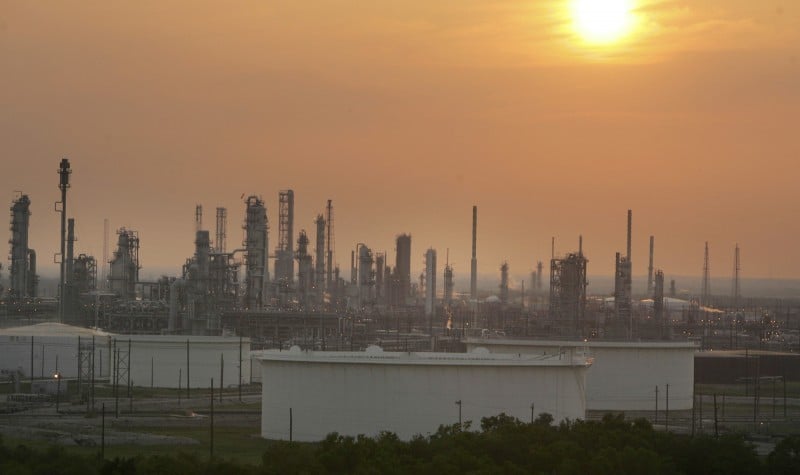 MIKE IVEY | mivey@madison.com | mivey@madison.com
Nov 4, 2011
Apparently, the editors at Site Selection magazine have not heard that Wisconsin is open for business.
The leading corporate real estate and economic development publication has again left Wisconsin off its list of http://www.siteselection.com/issues/2011/nov/cover.cfm">Top 25 States for Business Climate.
Site Selection released its 2011 rankings this week, with Texas slotting in at No. 1 after being runner-up to North Carolina for the past nine years. North Carolina fell to No. 3 behind Georgia.
The magazine noted that companies are flocking, literally by the thousands, to the Lone Star State. The Atlas Van Lines annual study of corporate relocations in 2010 showed more than 7,200 business moves to Texas, 58 percent of all the relocations in the nation last year.
Moreover, nearly 40 percent of the new U.S. jobs created since June 2009 were created in Texas, the magazine reports.
In its rankings, Site Selection uses a 50-50 mix of hard data and interviews with business executives. Data measurements include new plant openings; total projects per million in population and 2011 tax climate as measured by the Tax Foundation.
Executives interviewed offered comments on why Texas is such a great place to do business. Among them were "a pro-business, entrepreneurial, right-to-work state" and "no state income tax, ease of pulling permits, available workforce."
The top five states named by Site Selection are all from the South but Indiana ranked No. 6, Ohio No. 9, Michigan No. 15, Illinois No. 21 and Iowa No. 23.
To find Wisconsin on the Top 25 list, you need to scroll all the way back to http://www.siteselection.com/sshighlites/1098/">1998, when the Badger State slotted in at No. 22 and Tommy Thompson was in the governor`s office. It hasn`t appeared in the Top 25 since.
States can move quickly up and down. California was No. 1 back in 2000 but has fallen to No. 20 in 2011. Michigan was No. 2 as recently as 2002.
Wisconsin did enjoy a nice mention in the May issue of http://chiefexecutive.net/">Chief Executive Magazine, which ranked the state as the 24th best in the nation to do business, up from 41st in 2010. That was the biggest increase of any state and http://walker.wi.gov/journal_media_detail.asp?prid=5809&locid=177"> a ranking that was http://walker.wi.gov/journal_media_detail.asp?prid=5809&locid=177"> cheered by Gov. Scott Walker.
The editors of Site Selection, based in Norcross, Ga., did predict a comeback of sorts in the Midwest http://www.siteselection.com/issues/2011/sep/Upper-Midwest.cfm">in this article published in September. It notes the Upper Midwest has lots of unused industrial capacity and is poised to rebound.
So how can Wisconsin improve?
"Hanging an open sign is only the first step in encouraging new business," says Ken Harwood, editor of https://kenharwood.com/">Wisconsin Development News and former mayor of Neenah. "We need to stock the shelves with products businesses want, like, great employees, good schools, continuing education, infrastructure improvements, and a stable tax environment."
Milwaukee area businessman and http://johntorinus.com/">columnist John Torinus says he doesn`t put a lot of stock in magazine rankings of business climate.
"To me there is only measurement that really matters and that is how many new companies are you creating," he says. "We need to make Wisconsin the kind of place where people want to start a business."
On the positive front, metro Milwaukee -- which includes Waukesha and West Allis -- has ranked near the top nationally of major metro areas for job growth for most of 2011.
"Wisconsin is doing better but there is more to be done," says http://www.refocuswisconsin.org/wisconsin-weve-got-a-problem-by-tom-hefty-john-torinus-and-sammis-white"> Tom Hefty, former CEO of Cobalt Corp. and a longtime state business advocate.
But Wisconsin http://money.cnn.com/2011/09/18/news/economy/poverty_perry_texas/index.htm"> beats Texas on a couple of important measures. It has both a lower unemployment rate and lower poverty rate.
...Full Story Here
Ken Harwood: Here’s some common sense advice for election winners
 Nov 3, 2010
Dear Editor: I have some advice for the winners of Tuesday’s election. I base it on things I have done (or not done) as an elected official in the past, as an advocate for economic development and jobs in the present, and as a retiree in the future. It is nonpartisan and it is very basic.
• Don’t spend what you don’t have. If you do not have a known revenue source to support a program, don’t approve the program.
• Spend one-time money once. If your community gets a federal grant and hires three new police officers, next year it has no grant but three additional employees.
• Borrow only for things that will outlast the loan.
• Think globally by empowering locally. We need to focus on U.S. companies and opening overseas market to our products before we make cheap consumables available to the Walmart shopper.
• Banks don’t buy cars and houses, people do. Make loans and jobs available to the people so that they can stay in their homes, not to the banks so they can afford to foreclose.
• Use a cause and effect tax structure. If we need substantial road and transportation improvements, use gas and vehicle taxes to pay for them.
These are simple, obvious, logical rules -- most of which, if not all, will be broken before the next election. In two years I will be able to make the same recommendations, and I will sound as obvious then as I do now -- and that is the problem.
Ken Harwood
...Full Story Here
Ken Notes: Deaf ears??? They all read it though...
Ken Harwood: Energy, surfing, and good business
 Ken Harwood | Capital Region Business Journal columnist
Dec 27, 2009
There is a tidal wave of government regulation regarding the production of energy on the horizon. Both the U.S. House and Senate are currently considering bills that would require substantial amounts of energy to be produced from renewable or cleaner sources. The two bills both enact a set of mandates that “cap” future carbon emission levels and allow utilities to “trade” emissions on the commodities market. I would be negligent to not point out how well using these same markets worked for the banking and mortgage industries.
This system of “cap and trade” regulations will change the way we do business in the U.S. and the Midwest. States that rely on the use of coal -- and have less than ideal conditions for the production of solar, water or wind energy -- will suffer. These states will be forced to either pay for more expensive/less productive technologies or will have to purchase credits from areas requiring fewer resources or producing more carbon-free energy. The end result, in either case, will be higher energy costs for Midwest manufacturing states including Wisconsin.
Unfortunately the real winners may not be the U.S. at all. Countries that ignore environmentally friendly policies and are able to supply lower cost energy will attract new manufacturing. Nike shoes and Apple Computers, manufactured abroad, would benefit — while New Balance and Dell, with North American facilities, would suffer. The debate has also become extremely partisan, which makes little sense to me because at the heart of the issue are domestic jobs and the U.S. economy. In the end we may actually create substantially more carbon emissions worldwide as our heavy manufacturing moves to countries with lower or nonexistent emission regulations.
Let me outline the dilemma as I see it. Assume the UW-Madison develops new technologies for an electric vehicle. A Wisconsin company licenses the technologies and develops a cost-effective prototype for a car with zero emissions. Plans for production begin and the company is forced to another region or overseas because of energy costs and government regulation. Can’t happen, you say -- I would point out that there are no televisions that are made in the U.S., most other consumer electronics are foreign, most cars are imports, most toys, clothes, and even much of our food is no longer domestically produced. I am a fan of the global market but the playing field has to be somewhat level for the game to be fair.
Now for the positive side of the energy dilemma. One Wisconsin firm has seen the tidal wave and decided to grab a surfboard and ride it in. I sat down with Scott Neitzel of Madison Gas and Electric and asked about the future of energy production in Wisconsin. Scott shared an MGE initiative, the Energy 2015 Plan, to create economic and environmentally responsible energy. The plan outlines that the company will discontinue burning coal at the downtown Madison Blount Generating Station by 2011, increase its use of wind tenfold, involve the customer in energy efficiency efforts, and secure a cleaner more reliable and affordable product across the board.
To date MGE has made good on the promise. The Blount facility will soon no longer rely on coal, MGE has increased its wind generation from 11 to 137 megawatts, and the company has incorporated new cleaner technologies into its generation facilities portfolio. In addition, MGE has educated the consumer and offers a Green Power Tomorrow program, which allows customers to voluntarily purchase renewable energy for a penny per kilowatt-hour and sell solar energy back to MGE for $0.25 per kilowatt-hour.
Neitzel suggests, “Renewable energy is a part of our corporate culture from the top down.” In describing how they got here he used a sports metaphor from Wayne Gretzky: “You skate to where the puck is going to be, not to where it is.”
The most interesting observation I can make is that MGE was not motivated by current policy or the looming cap and trade initiative. In fact the 2015 Plan was adopted in January of 2006, a full two years before the new administration or current legislative agendas. I learned a lot about balancing good business with good policy from Scott and MGE. I hope this lesson will be shared on Capitol Hill before legislation is drafted. We must remember that energy, the environment and good business is, like surfing, a balancing act. If we are really going to ride the wave to shore, we need to see it coming.
One more confession, I stole the whole surfing analogy from Scott. Sorry -- Cowabunga dude!
...Full Story Here
Ken Notes: I was a featured columnist for Capital Region Business Journal for two years. Unfortunately most of the stories are lost or in my scrapbooks....
Ken Harwood: Legislators should be more in touch with the locals

Dear Editor: Today’s news is suggesting that Tom Barrett would not remove his children from their Milwaukee schools if he were to run for governor and that he would want to spend some time in Milwaukee if he was elected. I suggest that not only could this be a good idea for the governor, it would be a great idea for the rest of the elected state officials as well.
Spending time outside Madison would allow our legislators to spend more time in their districts talking to local businesses, having coffee with seniors, getting involved with the local schools, and getting to know the real problems and the real opportunities in their districts.
I have served on a school board, city council, or as mayor of a community in this state almost continuously since 1982 and I can count on one hand the number of times an elected official actually came to a meeting or sat down to talk with the local elected officials. I have seen countless pieces of legislation passed that would have no doubt benefited from the input of these local officials.
Specifically the qualified economic offer for teachers, tax incremental financing laws, and many of the grants and loans for business all slightly missed their intended mark. Just a little insight could have prevented errors that have had to be fixed or have cost the state real tax dollars, new business, or great teachers.
Wisconsin was founded on the ideal of part-time legislators in touch with their respective communities. While legislators retain residences in their district, the “in touch” factor is, in most cases, simply not there.
Ken Harwood
Verona
Biz Beat: Obama to stump here for Barrett?
Mike Ivey|
mivey@madison.comOct 29, 2009
All we know for sure is that 1) President Barack Obama is scheduled to visit the Madison area next Wednesday and 2) he wants the Milwaukee mayor to run for governor.
But Ken Harwood, who puts together a good weekly recap of local and statewide business in his http://www.wisconsindevelopmentnews.com/">Wisconsin Development News speculates the two are linked.
"My crystal ball says you will see a (Tom) Barrett announcement tied to the Obama visit next week. They will use Wisconsin`s leadership in education to stress the importance of a an education friendly administration. Just a guess. WDN is not meant to be political but the next governor will have a huge impact on economic development in the state," Harwood opines.
Dan Bice of the Milwaukee Journal Sentinel has the same thoughts you can read http://www.jsonline.com/watchdog/noquarter/65957092.html">here.
Ah, nothing like a good political race to get your mind off the economy.
...Full Story Here
Ken Notes: Do I get credit for being correct???
A "Note" for Governor Elect Evers...

Today newly elected Governor Evers will find a flawed economic development corporation (WEDC) sitting on his desk. He is proposing eliminating the entity – that would be a mistake. To compete for jobs and encourage new companies to come to Wisconsin we need an organization that can both shepherd them through the process and offer State and local incentives that will help them build, expand and hire new employees while still benefiting the local community and the State. Tony Evers has a real opportunity to change WEDC for the better – he may not.
WEDC needs to change and I have written about these changes before, but eliminating the organization and returning the functions to the even more bureaucratic departments of Commerce and Administration – would be a mistake. At this point I am tempted to simply insert the article I wrote six years ago and I promise it would stand up today. Instead I will offer just a few observations and suggestions that I hope someone will pass along.
First we need to bring an economic development team to the entire state. Today we have independent professionals in most counties and major cities. I propose that these non-government employees become a part of a truly independent WEDC. Salaries and benefits would be paid in part by the local communities and in part by WEDC. (A note to Tony: This would be equivalent to the CESA or UW Extension systems now used by schools and local government). These professionals would work locally but would come to Madison regularly to develop strategies and learn all the tools at their disposal.
Next we need to recreate and redistribute the tools. Tax incremental finance laws need to be rewritten to mirror how they are actually used successfully today. We need to remove the politics from new jobs tax credits and make these credits available to all growing companies who are willing to work with the State and local communities and pay a good wage. Finally we need to track and facilitate the distribution of thousands of other benefits and programs. From federal Community Development Block Grants and Small Business Development Programs to local development programs, there are funds available that will require a unified effort to track, apply for and administer.
We also need to track and control our efforts. A simple database of every company, incentives received, taxable value on brick and mortar and number of new employees should be easy to create and maintain. The current WEDC sent me a spreadsheet with some of this data and then got upset when I reported that they had given millions to a company who failed to move to Wisconsin. Speaking of failure, we need to tie all of our incentives to measurable objectives. Doing this correctly will not require claw-backs, lawsuits, and vanishing funds. We also need to partner with banks, angel investors, and “Mr. Wonderful of Shark Tank” to bring the expertise they offer to the table. If these entities do not see the value in a proposal we should take that as a hint that we may not want to invest either.
So here is the challenge. Governor Evers, you can be political and remove a flawed WEDC and return our economic development efforts to the hundreds of disjointed entities currently in place – or you can be be a public servant and unify our efforts across the State to actually support the businesses that will provide jobs that will generate the taxes you need to accomplish your greater agenda. Do you build the railroad or derail the train???
Ken Harwood
Editor and Publisher WisconsinDevelopment.com ...Full Story Here
Ken Notes: a follow up. Governor Evers did preserve the WEDC and has appointed new leadership. now we need to focus on helping all businesses in Wisconsin regardless of political affiliation or size.
Wisconsin State Office Building (DHFS)

Foxconn by the Numbers - It is NOT politics - by Ken Harwood
"In terms of TV, we have no place in the U.S., We can`t compete."
“If a certain size of display has more supply, whether from China or Japan or Taiwan, we have to change, too.”
“In Wisconsin we’re not building a factory. You can’t use a factory to view our Wisconsin investment,”
Foxconn by the numbers. China`s median monthly wages (Shanghai - $1,135, Beijing - $983 and Shenzen - $938) have increased exponentially over the past few years and like Japan and South Korea may eventually catch up with the median labor wages in the US -- but not yet or any time soon. The US is still paying three to five times as much for equivalent labor. Even though the Chinese market is as tight or even tighter than ours for skilled labor, there are still workers available for a good job and the newer Foxconn jobs and workplaces have also improved exponentially. Foxconn has also found another strong and inexpensive labor force in Mexico and their new plans are to manufacture product in China and assemble in Mexico for sale in the US. My favorite website for a quick look at all the numbers is found at https://www.worlddata.info/average-income.php.
The second aspect of the equation is the price and margins on higher end screen technology. From 10 years ago to today screen prices have gone from $6.60 per square inch to less that a dollar today. There was a thought recently that this was going to level off and 4K and 8K would enter the market with higher prices and new demand -- that did not happen. In fact we are even seeing better units at lower prices for Supper Bowl Sunday compared to Black Friday -- a span of just three months.
Development Matters with Ken harwood

This show is on Hiatus
...Full Story HereWEDC, DPI and My Thoughts...
 This op-ed is about
the WEDC but you will need to get to the end of my story to find out how. In the
90’s I served on a school board for 8 years, and was active at both
the State and Local levels. I was an advocate for students first,
faculty and staff second, and taxpayers (my actual bosses) third. I
took all these responsibilities very seriously and to the best of my
ability equally. Education was served and managed then, as it is now,
by the Department of Public Instruction (DPI). I believe education
was well served.
This op-ed is about
the WEDC but you will need to get to the end of my story to find out how. In the
90’s I served on a school board for 8 years, and was active at both
the State and Local levels. I was an advocate for students first,
faculty and staff second, and taxpayers (my actual bosses) third. I
took all these responsibilities very seriously and to the best of my
ability equally. Education was served and managed then, as it is now,
by the Department of Public Instruction (DPI). I believe education
was well served.
That said, the DPI on more than one occasion drove me crazy. I felt the DPI supported teacher mandates, property tax increases, and often, I felt they placed the student lower on their priority list than they should have. They were in charge of implementing hundreds of federal mandates (the Title Programs), grants and special funding. All of this came with strings and complexities that made being a public servant challenging and the DPI very very necessary and often even more frustrating.
During my tenure I served on the School Board Association`s State Legislative committee and we often debated the role of DPI and the State Superintendent and whether the State legislature and governor should have more control. One of my favorite memories from that period was anytime I got to sit in a room where both Bert Grover and Tommy Thompson were both at the table. What I learned was that it was not easy being in either position. They discussed, argued, and even fought – but in the end they most often compromised and the student, teacher, taxpayer triumvirate was well served. We had one of the best public education systems in the nation. I voted to maintain this separation of church and state -- even though it often made my job on the school board more complicated.
Today we are dealing with an educational system where the triumvirate balance has been disturbed by a non compromising legislature and the business system has been challenged by a new administration promising change. Now the DPI and WEDC will both need to change moving forward. The challenge is to remember the balance in the mix. We as a government must administer the complexity of the system: Taxes, Mandates, Local Government, Rules and Regulations, Grants, Leadership, Communication and Support.
I do not see this
going well and already the legislature has jumped into full battle
mode with special legislative session that will not serve businesses
as much as it will agitate the incumbent who has said he
will challenge this in court.
Moving forward my crystal ball suggests that for the next four years any increased funding for DPI or Local Schools will not survive even the finance committee much less the legislature. I also predict that any business or economic development support items inserted into the budget will be line item vetoed by the new Governor. I do not see any winners in this new scenario, but I know students and business will not fare well. Taxpayers will get less and pay more, and “Public Servants” are a dying breed.
I miss Bert and Tommy...
Ken Harwood
Advocate for Wisconsin, ED professional, former Mayor, former School Board Member and Editor of this publication.... ...Full Story HereNotes:
Project Distillery / Brewery News letter

Guy Rehorst | Founder
616 W. Virginia St. Milwaukee, WI | 414-431-8683 ext113 | www.greatlakesdistillery.com
Shipping container notes...

7 Design-Forward Shipping Container Hotels
Think Inside the Box: The Coolest Revamped Shipping Container Hotels
Youtube Vidio
Development Matters with Ken Harwood

- Development Update and Discussion
- Environmental Notes and Viewpoint
- News and Notes on Our Topic for the Week
- Special Guest
- Questions from our listeners and discussion...
- Our two cents and conclusions...
- WEDC
- Doyle Square
- New Renewable Energy
- CoWorking and the new Office
- Economic Development Tools - TIF, Taxes, and Time
- Partisanship and Politics
- Biking to Work Ideas
- Micro homes / Affordable Housing
- CAFOs and the Small Farm
- Green Bay Packer Stadium and Area Development
- Water Quality
- The decline of the mall
- Tourism
- The Last Mile Distribution - Amazon
- New Milwaukee Bucks Stadium
- WARF and the Research Park
- Crossing the Border Suburban Development / Sprawl
- Training the Workforce
- Foxconn
- Transportation, Roads, and Transit
- Breweries in Wisconsin
- Milwaukee Area Development
- Madison Area Development
- Fox Cities Area Development
- Green Bay Area Development
- Southwest and Western Wisconsin Area Development
- Central Wisconsin Area Development
- Northern Wisconsin Area Development
Idea - Office Space and Myers Brigs..
If you’re an ISTJ (aka the “Logistician”): Orderly and dutiful, ISTJs thrive in a traditional workspace and do best when they progress slowly up the ladder, achieving their goals in good time and measure. These dedicated thinkers bring a certain harmony to their workplaces, since their chief goal is to create a smooth, stable operation. For them, a highly structured office is best, one where there’s a place for everything, and the furniture is sturdy and reliable. However, these slow-and-steady workers may benefit from unexpected details, so don’t be afraid to wear that kooky sweater or take on a project you’re not so sure about.If you’re an INFJ (aka the “Advocate”): INFJs are a unique blend of emotion and concrete action. As a seeker of harmony and justice, you likely have many fans around the office, meaning tons of visitors who may not be welcome when you need to recharge. Give yourself the ability to shut the world out by installing a cubicle privacy door in your space, setting your remote communication tools off, or by asking team members to schedule meetings ahead of time. When you set up your workspace, feel free to scrap the traditional desk/chair/filing cabinet arrangement for something that better suits your unique preferences. Don’t worry—with your intuition and innate sense of balance, you’re bound to find the right setup!
If you’re an INTJ (aka the “Mastermind”): You could just as easily nickname this type the “bookworm,” since INTJs have an ingrained thirst for knowledge and highly cerebral pursuits. If you fall into this personality type, you’d do well to curate a library of professional reading that tickles your intellectual curiosity. Keep these books in your office where you can access them in one of your many retreats from the rest of the team. In terms of decor, opt for flexible furniture, such as a convertible standing desk that will suit your need for freedom in your workspace. Choose colors that are soothing, with geometric patterns that work with your highly strategic mindset. And make sure that everything stays orderly—there’s nothing an INTJ hates more than a chaotic desk!
If you’re an ISFJ (aka the “Nurturer”): ISFJs are natural helpers, but they have a tendency to underestimate their own contribution to office culture. Therefore, they might benefit from displaying evidence of their achievements on their office walls—perhaps hanging an award or the race bib from a completed marathon. Take time selecting your furniture when you set up your workspace, since you tend to perform best when everything feels welcoming and nothing is overlooked. And remember to book some time for learning when you start a new project. Nurturers like to approach new tasks with a hands-on attitude, so you’ll need some room in your schedule to really dig into the details.
If you’re an ISTP (aka the “Virtuoso”): Decorating for you means finding the perfect balance between order and quirkiness. With your out-of-the-box approach to life, you thrive in spaces that both allow you to express your unique blend of boldness and freedom and provide an enclosed retreat for private tinkering. Look for unusual, stimulating colors, like peaches and mint greens, but keep the furniture sleek with a slim profile that doesn’t intrude on your thinking. And make sure to add some tactile desk toys—it will give you something to fiddle with while you wait for the perfect solution to drop out of the sky!
If you’re an ISFP (aka the “Artist”): If you’re an ISFP and you’re reading this, you’ve probably already put a lot of thought into your office’s setup. As sensual, visual people, ISFPs thrive on aesthetics—but that can also make them a little overly-sensitive to what’s going on around them. ISFPs should therefore strive to separate themselves from busy atmospheres, choosing instead spots near a window, where they can be drawn in by the natural ambience. No windows in your office? Choose some soothing furniture, like a desk in blonde wood, and top it with plants or a small tranquil waterfall. Anything beautiful and peaceful is your milieu.
If you’re an INFP (aka the “Idealist”): Dreamy and emotive, INFPs seek harmony and fairness in the workplace. This type needs a soothing, calming space to retreat, where they can recharge and reflect on their next move. If you can, choose an office space that’s set away from the hustle and bustle of the main room. INFPs may have trouble becoming inspired by traditional office decor with its focus on function. Instead, you should try to integrate your personal passions into your office, choosing pieces that are fair trade, for instance, or that weave in natural elements.
If you’re an INTP (aka the “Architect”): INTPs adore playing with ideas and exploring—no wonder some of the world’s renowned scientists fall into this personality type. These are the folks who are so creative and logical they can come up with the theory of relativity (Einstein is one of their more celebrated members), but will often abandon their coffee mid-sip in the throes of a new theory. A well-ordered space, with highly efficient shelving and organization systems, will suit this type well. But make sure to include a miscellaneous file—and a nook for doing more unordered thinking—for when the creative bug sets in.
If you’re an ESTP (aka the “Entrepreneur”): ESTPs are having quite a moment these days. These rulebreakers love to think outside the box and are the kind you’d see chatting about “disruption” and “failing forward.” Therefore, they need an energetic workspace that captures the boldness and risk-taking that inspires them. Charged colors, like electric blue or bright orange, with unexpected accents—a curved desk, for instance, or an unusual piece of artwork—will keep this type running on all four cylinders. Just don’t go for anything too fussy. With your preference for rapid change, you’ll likely be reorganizing often.
If you’re an ESFP (aka the “Performer”): Expressive and vocal about your opinions, you probably take no issue redecorating your office as you see fit. But as a caring, compassionate person, you love to reach out to friends around your workplace too, so don’t be afraid to ask them for their advice! Seriousness is for the other personality types to worry about, so go ahead, grab that fabulous bulletin board and that dramatic desk chair. Just make sure you don’t get too caught up in decorating—after all, you still have actual work to do!
If you’re an ENFP (aka the “Campaigner”): Blessed with natural charisma and an energetic spark, ENFPs are passionate about their ideas and bring the fun at the office happy hour. In their workspaces, they need decor that will refill their nearly never-ending cup of joy. But they could probably also do with some simplifying as well, since these types hate routine tasks and view organization as a form of drudgery. Keep your filing system as simple as possible to avoid the blahs and allow you to focus on what you care about: new ideas.
If you’re an ENTP (aka the “Visionary”): As “big picture” thinkers, ENTPs tend to overlook the finer details, such as organization. For these idea-oriented types, challenges are motivating, so if you can view the cleaning as a problem that needs to be solved, you’ll likely have much better results. Use unconventional solutions—an unusual, eye-catching shelf, or a standing desk with rolling walls—or just give yourself the freedom to work in a new coffee shop or restaurant, if that’s an option. Just keep it flexible, and remember: everything is reversible!
If you’re an ESTJ (aka the “Executive”): As you might guess by their moniker, ESTJs thrive on order and tend to follow the rules. They’re also hard-working and moral, so they don’t like to be weighed down by trivial details. Therefore, if you fall into this category, you’ll do best with clean, unfettered decor that doesn’t really push the envelope. Think “oval office” and get inspired by the mixture of traditional luxury and executive prowess. And make sure to add an extra seat for visitors. With your reputation for leadership and community organization, you’re sure to have a more than a few office drop-ins!
If you’re an ESFJ (aka the “Caregiver”): You know that one chatty coworker who’s always game for a quick conversation? If you’re an ESFJ, it’s probably you! You love working with people and view meetings as more than just work—they’re a chance to entertain, too. Give yourself enough room to invite people in when the mood strikes, while still maintaining the order and organization in your space. Go for practical, utilitarian pieces, like a rolling white board, that can help you lead a group meeting and keep your thoughts together.
If you’re an ENFJ (aka the “Giver”): Generous and collaborative, an ENFJ is the very definition of a “people person.” Therefore, they prefer spaces that are hospitable, inviting, and comfortable, and thrive in spaces that are energetic and novel (think “startup with bean bag chairs and wall murals.”) Choose pieces that are punchy and will start a conversation, but still maintain a sense of order in your space. Whatever you do, make sure there’s plenty of room for collaboration. In fact, you may even want to share your office, if that’s a possibility. ENFJs are one of those rare types who actually enjoy open plan offices, since they allow them to easily do their work in teams. If you work from home, try out coworking spaces and coffee shops.
If you’re an ENTJ (aka the “Commander”): You like to brag that you’ve never been bested by a car salesman, and that’s because you enjoy the challenge of negotiating. With your commanding presence and dominating personality, you need decor that’s just as domineering—and maybe even just the slightest bit intimidating. Pick out the biggest desk you can get and a plush leather chair to capture that ambience of control. But don’t forget to allow your sensitive side out once and awhile, too. A few gentle touches, like a photo of your dog displayed on one of your shelves, will go a long way to humanize you to your fellow teammates.
Looking to nurture some of the different personalities in your office? At Pingboard, we try to design our org chart software with relationships in mind, and believe that redesigning your org chart could generate some new friendships around the office. After all, there may be a lot of different types of workers, but we’re all on the same team!
Erin Vaughan currently resides in Austin, TX, where she writes about workplace culture and human resource solutions for Pingboard. Pingboard is real-time, collaborative org chart software that makes it easy to organize teams, plan for growth, and keep everyone informed.
...Full Story Here
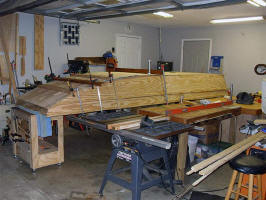
Crazy Idea #08242022 - The Jon boat...
Development Matters TV Show
Does this format fit your vision:
Half-hour show of (28:30 length) running Sundays at 730am.
Client/host is Ken Harwood, business writer, blogger, PR specialist, former mayor of Neenah, WI.
Show is called Development Matters. It’d be a half-hour show devoted to business development in southern Wisconsin. What’s new, what’s concerning, what’s exciting.
I will get you half-hour prices quarterly for the coveted Sunday 730am slot.
Will try to promote this in our Newscast with the anchor as a live-read.
Will get you the editing charge (if any) to clean up your finished product.
Will need your logo.
How’s that sound so far?
Thanks
Chris Lezotte
Marketing
WMSN-TV, Madison, WI
608 662-5019 direct
608 217-9419 cell
DIY Studio
Mixer
https://www.amazon.com/Behringer-Xenyx-1204USB-Premium-12-Input/dp/B00871VO5Y/ref=sr_1_7?dchild=1&keywords=12+channel+mixer+usb&qid=1589995615&sr=8-7
Cameras
https://www.amazon.com/Logitech-C930e-1080P-Video-Webcam/dp/B00CRJWW2G/ref=sr_1_3?crid=NWML380MDIXY&dchild=1&keywords=logitech+webcam+c930e&qid=1589995804&sprefix=logitech+webcam+c%2Caps%2C184&sr=8-3
Mics
Lighting
Software
Computer
Background
https://www.bhphotovideo.com/c/product/859488-REG/Impact_Background_Support_System_12.html
Notes: